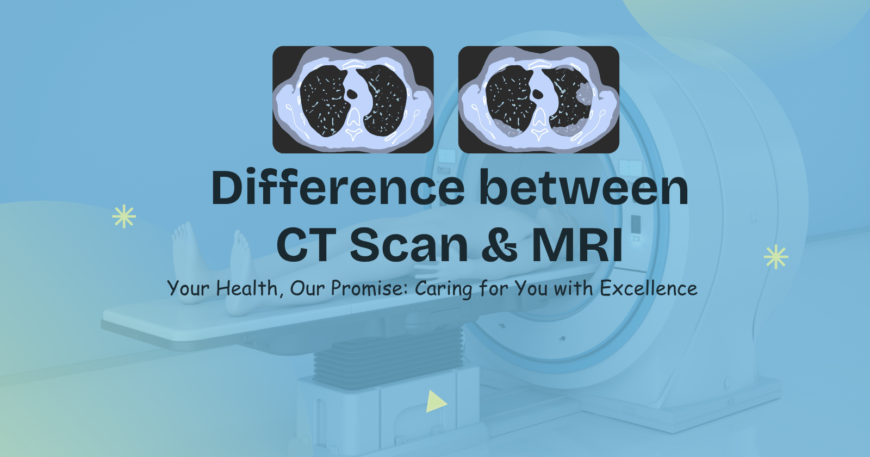
Difference between CT Scan & MRI

CT Scan vs MRI: What’s the Difference?
When your doctor needs to look inside your body to make an accurate diagnosis, they will often order a medical imaging scan. Two of the most common—and powerful—tools we use
at Healthways Medical Diagnostic Centre are CT scans and MRI Scans.
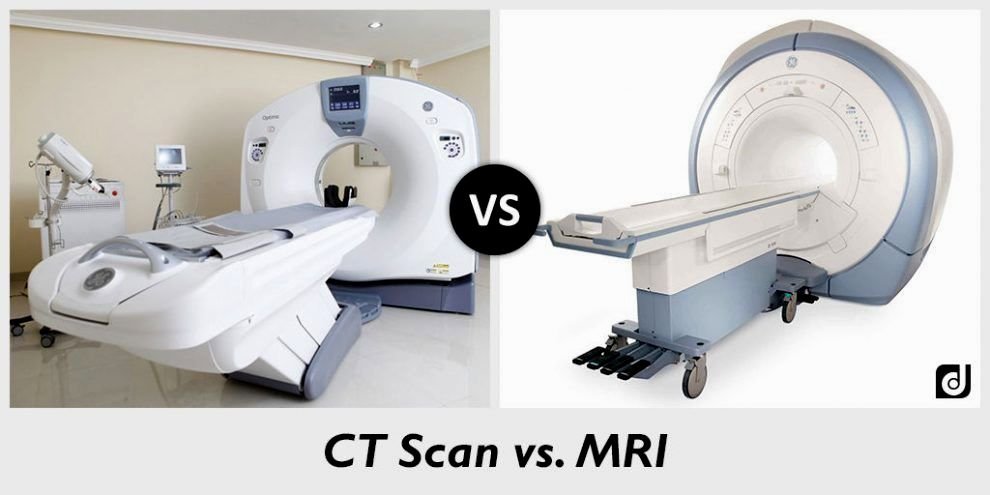
While they might look similar from the outside (both involve a large, doughnut-shaped machine), they use entirely different technologies to see inside the body. At Health Ways Medical Diagnostic Centre, we offer advanced CT and MRI services to help physicians make accurate diagnoses and provide the best possible patient care. Understanding the differences between these imaging methods can help patients feel more informed and confident about their healthcare journey.
How each Scan Works
The fundamental difference between a CT scan and an MRI is the energy source used to capture the images.
CT Scan (Computed Tomography)
A CT scan is essentially a sophisticated, 3D X-ray. While a standard X-ray takes a single flat picture, a CT scan rotates around your body, taking a series of X-ray images from multiple angles. A computer then compiles these “slices” to create highly detailed, cross-sectional views of your bones, blood vessels, and soft tissues.
MRI Scan (Magnetic Resonance Imaging)
An MRI does not use radiation at all. Instead, it uses a powerful magnetic field and radio waves. When you lie inside the MRI machine, the magnetic field temporarily aligns the hydrogen atoms in your body. Radio waves then cause these atoms to emit faint signals, which the computer translates into incredibly sharp, detailed 3D images of your internal organs and soft tissues.
When do Doctors Recommend Them?
Because they capture different types of details, doctors choose between a CT and an MRI based on what specific symptoms or conditions they are investigating.
When a CT scan is Typically Recommended:
Emergency Situations: Because CT scans are incredibly fast, they are the gold standard for trauma, car accidents, and emergency room visits to check for internal bleeding or organ damage.
Bone Fractures and Tumors: CT scans provide excellent clarity for complex bone fractures or tracking the size and location of tumors.
Chest and Lung Issues: They are highly effective at diagnosing lung conditions, pneumonia, or blood clots in the lungs (pulmonary embolisms).
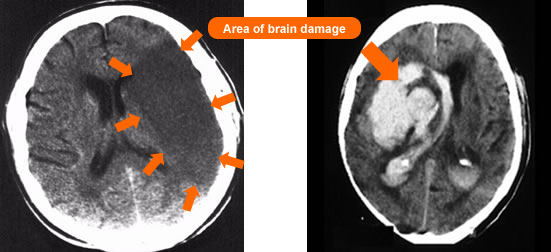
Stroke Diagnosis: A rapid CT scan of the brain is crucial in the ER to determine if a stroke is caused by a blood clot or a bleed.
CT scan showing an ischaemic stroke (left); CT scan showing a haemorrhagic stroke (right)
When an MRI Scan is Typically Recommended:
Soft Tissue Injuries: If you have torn ligaments, tendons, or cartilage (like a knee or shoulder injury), an MRI provides unmatched detail.
Brain and Spinal Cord Disorders: MRIs are exceptional for detecting multiple sclerosis (MS), brain tumors, spinal cord injuries, and herniated discs.
Neurological Complaints: Chronic headaches, dizziness, or unexplained nerve pain often warrant an MRI.
Pelvic and Abdominal Organs: It is frequently used to get a closer look at the liver, uterus, ovaries, or prostate.
Advantages & Limitations
To help you understand what to expect during your appointment at Healthways, here is a quick comparison of the pros and cons of each technology.
| Feature | CT Scan | MRI Scan |
| Speed | Very fast (usually takes 5–10 minutes). | Slower (takes 15–45 minutes or longer depending on the area being scanned). |
| Comfort | Open, quick, and quiet. Great for patients who feel anxious or claustrophobic. | The machine is narrower and produces loud thumping/clicking noises. Hearing protection is provided. |
| Radiation | Uses a low, safe dose of ionizing radiation. | Zero radiation. Safe for repeated use. |
| Best For | Bones, chest, lungs, and acute emergencies. | Brain, spine, joints, muscles, and soft tissues. |
| Safety Restrictions | Generally safe for most patients, though contrast dye may require kidney function assessment before use. | Powerful magnets mean patients with pacemakers, certain implants, or metal fragments (shrapnel) may not be eligible for MRI. |
Which One is Right for You?
Ultimately, neither scan is “better” than the other—they are simply different tools for different jobs. Your doctor will select the scan that will provide the clearest answers for your specific health needs.
Doctors typically choose:
CT Scan when:
- Speed is critical
- Trauma or bleeding is suspected
- Bone injuries need evaluation
- Lung assessment is required
MRI when:
- Detailed soft tissue imaging is needed
- Neurological conditions are suspected
- Joint and ligament injuries require evaluation
- Radiation exposure should be avoided
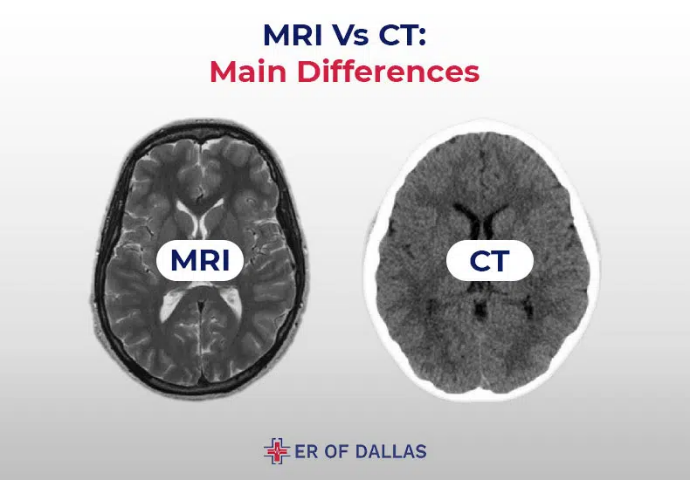 The most appropriate imaging test is determined by your healthcare provider based on your specific clinical situation.
Your Imaging Needs at Healthways Medical Diagnostic Centre
At Healthways, your health, safety, and comfort are our top priorities. Our advanced diagnostic imaging suites are staffed by highly trained technologists and experienced radiologists committed to delivering precise, timely results to guide your care.
If you have questions about your upcoming scan or need to book an appointment, please reach out to our team today. We are here to guide you through every step of the process!